Why Nighttime Sugar Cravings Hit Harder (and What Most Articles Get Wrong)
I remember the first time I tried to stop my 10 p.m. sugar craving. I was fresh out of a nutrition course, armed with the standard advice: eat more protein, don't skip meals, drink water, and go to bed earlier. It worked for exactly two days. On night three, I was back in the kitchen, spoon in a jar of peanut butter, wondering why my willpower had evaporated.
That's when I realized the problem wasn't a lack of willpower or a mineral deficiency. It was a learned habit loop - a specific cue (the sofa, the TV, the stress of the day), a routine (walking to the pantry), and a reward (a dopamine hit that temporarily numbed the evening restlessness). Most articles on how to stop sugar cravings at night miss this entirely. They treat the craving as a biological glitch, not a behavioral pattern. But if you've ever fought the same urge night after night, you know it's not just about what you eat earlier in the day.
This guide is built from my own trial-and-error experience and what I've since helped others implement. It's not a list of 13 generic tips. It's a step-by-step protocol to identify your personal craving triggers, surf the urge without giving in, and rebuild your evening routine so the autopilot snack drive fades for good.
Why Your Brain Craves Sugar at Night (The Biology You Need to Know)
Most people don't realize that your body's insulin sensitivity follows a circadian rhythm. Insulin sensitivity is highest in the morning and early afternoon, and it drops significantly in the evening. According to a study published in Nature, the same meal eaten at night leads to a higher blood sugar spike and a stronger insulin response compared to the same meal eaten earlier. Your body is literally less efficient at processing sugar after dark.
This biological shift sets the stage for cravings. As your blood sugar dips in the late evening (often after a dinner that was too carb-heavy or too early), your brain sends out a distress signal: eat something sweet, fast. But here's the thing nobody tells you: that signal is amplified by fatigue. After a long day, your prefrontal cortex - the part of the brain responsible for decision-making and impulse control - is tired. Your brain's reward system, on the other hand, is wide awake and looking for a hit of dopamine.
Add in a habitual cue - like flopping onto the couch with Netflix - and you have a perfect storm. The craving isn't purely biological. It's a learned association between a low-energy state, a specific environment, and a quick dopamine boost. Understanding this is the first step to rewiring it.
The Cue-Routine-Reward Loop: How to Identify Your Personal Nighttime Trigger
Every habit loop has three components: a cue (what triggers the behavior), a routine (the behavior itself), and a reward (the payoff). For nighttime sugar cravings, the cue is rarely hunger. More often it's boredom, stress, fatigue, or a visual trigger like walking past the kitchen. The routine is the snacking. The reward is the temporary relief from discomfort or the dopamine surge.
To break the loop, you first need to identify your specific cue. For the next three nights, keep a simple log. Write down the exact time you feel the urge, what you were doing, what you were feeling, and how strong the craving was on a scale of 1-10. Look for patterns. Common cues include:
- Time-based: 9:30 p.m., right after the kids go to bed
- Activity-based: Sitting down to watch a show or scrolling on your phone
- Emotional: Feeling stressed about tomorrow's to-do list, lonely, or anxious
- Environmental: Seeing the pantry or a tempting snack in plain sight
When I first did this, I discovered my cue was 10 p.m., right after my partner went to bed. I wasn't hungry - I was avoiding the quiet moment alone with my thoughts. The routine was a bowl of cereal. The reward was a few minutes of sensory distraction. That insight changed everything. Instead of fighting the craving, I could address the real need: a ritual to wind down, not a snack.
Urge Surfing: The 10-Minute Technique That Actually Works
Most people try to suppress a craving, which only makes it stronger. The alternative is a technique called urge surfing, borrowed from mindfulness-based relapse prevention. The idea is simple: a craving is like a wave. It rises, peaks, and then naturally falls - usually within 10 to 20 minutes. You don't have to fight it or act on it. You just have to ride it.
Here's the step-by-step protocol I use and teach:
- Pause and label it. Say to yourself, "I am having a sugar craving right now." This simple acknowledgment activates the prefrontal cortex and reduces the automatic response.
- Rate the intensity. On a scale of 1-10, where is the urge right now? (Usually it's a 7-8 at first.)
- Set a timer for 10 minutes. Commit to not eating anything during that time. Instead, do a non-food ritual that engages your senses or hands.
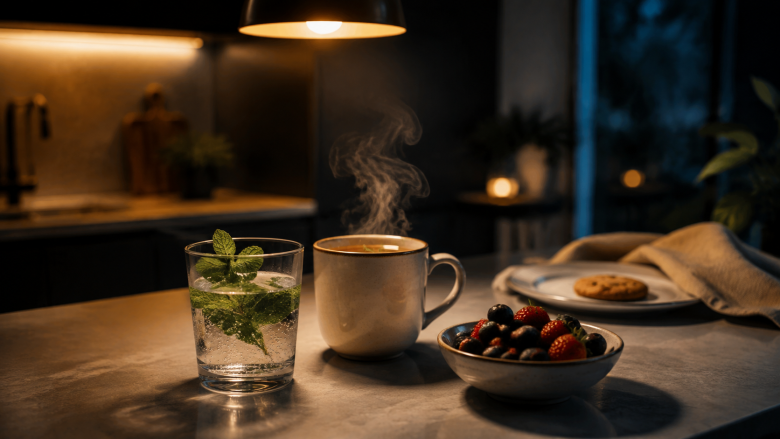
- Choose your ritual. This is key. The ritual must be something you can do immediately, without preparation. My go-to list: steep a cup of herbal tea (peppermint or chamomile), do 10 deep breaths with eyes closed, text a friend, or do a 2-minute stretch. The ritual should be pleasant enough to partially replace the reward of the snack.
- Re-rate the urge. After 10 minutes, check the intensity again. It will almost always be lower - often a 3 or 4. If it's still high, repeat the ritual once more. If it's still above 7 after two rounds, then you might be genuinely hungry, and you can eat a mindful, low-sugar snack (like a handful of almonds or a piece of cheese).
The thing nobody tells you about urge surfing is that it gets easier with practice. The first few times, the wave feels huge. But after a week, your brain learns that the craving doesn't have to be followed by action. The neural pathway weakens. The habit loop starts to dissolve.
Pre-Planning Your "Stop Line" After Dinner
One of the most effective strategies I've found is setting a definitive stop line after dinner - a clear boundary that signals the eating window is closed. This isn't about willpower in the moment; it's about making a decision earlier in the day when your prefrontal cortex is still fresh.
Your stop line could be a specific time (e.g., 7:30 p.m.), a specific action (e.g., brushing your teeth right after dinner), or a physical cue (e.g., closing the kitchen door or putting a "kitchen closed" sign on the counter). The key is that it's a non-negotiable rule you've set for yourself, not a decision you make each night.
When I first tried this, I made the mistake of setting my stop line at 8 p.m., but I hadn't planned what to do when the craving hit at 9. That's the edge case most articles miss. A stop line only works if you have a compelling alternative routine. If you're left with nothing to do, the craving will win.
So, pair your stop line with a planned evening ritual. For example:
- 7:30 p.m. - Brush teeth, wash face, change into pajamas
- 8:00 p.m. - Herbal tea and a 10-minute journal session
- 8:30 p.m. - Read a physical book (not a phone) for 20 minutes
- 9:00 p.m. - Lights out or a relaxing podcast
This pre-planned sequence replaces the autopilot snack drive with a new, healthier habit loop. The cue (e.g., finishing the dishes) now triggers the journal session rather than the pantry visit.
Rebuilding Your Evening Routine: A Step-by-Step Protocol
Now that you understand the habit loop, the urge surfing technique, and the stop line, it's time to combine them into a personalized protocol. Here's the framework I've used with dozens of clients who wanted to stop sugar cravings at night:
Step 1: Audit Your Current Evening (3 Days)
Log the cue, routine, and reward for each nighttime craving. Use the 1-10 intensity scale. Also note what you ate for dinner and how late you ate. This gives you a baseline.
Step 2: Design Your New Evening Ritual
Choose a stop line time that is at least 2 hours before your typical bedtime. Then plan 3-4 activities that you genuinely enjoy and that don't involve food. Write them down in order. Example: 7:30 p.m. stop line, then 7:30-8:00 p.m. tea and journal, 8:00-8:30 p.m. stretch or walk, 8:30-9:30 p.m. reading or a hobby.
Step 3: Prepare Your Environment
Remove trigger foods from sight. Put them in a high cabinet or in the garage. If you live with others, ask them to keep snacks out of the common area. At the same time, make your ritual items easy to access: set out your tea mug, place your journal on the nightstand, put a book on the coffee table.
Step 4: Practice Urge Surfing (First 7 Nights)
Every time you feel the pull toward the kitchen, do the 10-minute urge surfing ritual. Do not skip this step. It's the core of the habit rewiring. After 7 nights, you'll notice the craving intensity dropping.
Step 5: Evaluate and Adjust
After two weeks, check your log. If cravings are still strong, look at your dinner. Are you eating enough protein and fiber? Are you eating too late? Sometimes a small adjustment - like moving dinner an hour earlier or adding a protein-rich snack before the stop line - makes a huge difference. For a deeper dive into the hidden sugar content of common foods, you can use our White Sugar Calculator to see how much added sugar sneaks into your meals.
What to Do When Willpower Isn't Enough (Edge Cases and Advanced Considerations)
Let's be honest: sometimes the protocol above doesn't stick. There are edge cases where the craving is tied to something deeper - emotional eating, stress, or even a clinical condition like night eating syndrome. Here's what to consider when the simple steps aren't working:
Emotional Eating at Night
If your cravings are consistently linked to stress, anxiety, or loneliness, you need to address the emotion, not the food. The urge surfing technique works, but you may also benefit from a short mindfulness practice before bed. Try a 5-minute guided meditation or a body scan. If the emotion is recurring, consider talking to a therapist who specializes in eating behaviors.
The Role of Sleep Quality
Poor sleep is a major driver of sugar cravings. When you're sleep-deprived, your body produces more ghrelin (the hunger hormone) and less leptin (the satiety hormone). A 2016 study from the journal Sleep found that even a single night of short sleep increases cravings for high-calorie, sugary foods. If you're consistently getting less than 7 hours, prioritize fixing your sleep schedule before you try to fix the cravings.
Hidden Sugars in Your Diet
Many people don't realize that their daily sugar intake is much higher than they think. A can of soda, a flavored yogurt, or a pasta sauce can contain several teaspoons of sugar. This can create a cycle of blood sugar spikes and crashes that fuel evening cravings. To get a clearer picture, use our Sugar by Age Calculator to see recommended limits, or check the Drink Sugar Calculator to see how much sugar is in your favorite beverages. Even savory foods like steak can have added sugars in marinades or rubs - our Steak Sugar Per 100g Calculator can help you spot them.
Hormonal Fluctuations
For women, cravings often intensify during the luteal phase of the menstrual cycle due to changes in estrogen and progesterone. This is a biological reality, not a failure of willpower. During those days, you may need to adjust your stop line slightly (e.g., allow a small, planned treat like a square of dark chocolate) rather than trying to be rigid. The goal is long-term consistency, not perfection.
Common Mistakes That Keep You Stuck in the Craving Cycle
After coaching many people through this process, I've seen the same pitfalls repeatedly. Avoid these:
- Going cold turkey with no replacement. If you try to cut out all evening snacks without a new ritual, you'll feel deprived and eventually binge. The ritual must provide a similar reward - relaxation, distraction, or comfort.
- Using artificial sweeteners as a crutch. Diet soda or sugar-free candies can keep the desire for sweet taste alive and may even trigger cravings in some people. Stick with water, herbal tea, or whole foods.
- Eating dinner too early or too late. If dinner is at 5 p.m. and you're in bed at 11, you'll inevitably be hungry. If dinner is at 9 p.m., your blood sugar will spike right before sleep. Aim for dinner 3-4 hours before bed, with a small protein-rich snack (like a boiled egg or cheese stick) if needed.
- Relying on willpower alone. You can't out-willpower a habit loop. You must change the environment and the routine. That's why the stop line and the pre-planned ritual are non-negotiable.
Your Week 1 Action Plan
To make this actionable, here's a simple 7-day plan you can start tonight:
- Day 1: Log your craving cues and intensity. Set your stop line for tomorrow.
- Day 2: Design your evening ritual. Buy herbal tea if you don't have any.
- Day 3: Remove trigger foods from sight. Plan your first urge surfing practice.
- Day 4: Execute the full protocol. After the stop line, do your ritual. If a craving hits, surf it.
- Day 5: Review your log. Notice any patterns. Adjust dinner timing if needed.
- Day 6: Try a new ritual (e.g., a short walk outside after dinner) to keep it fresh.
- Day 7: Reflect on the week. You'll likely see the craving intensity drop by 2-3 points.
Remember, the goal isn't to never feel a craving again. Cravings are normal. The goal is to break the autopilot response so you're in control, not your habit loop. When you feel that pull, you now have a tool kit: identify the cue, surf the urge, and redirect to your new ritual. That's how you stop sugar cravings at night - not by fighting them, but by rewiring the loop that drives them.