Should You Do Pilates With a Bad Knee?
The short answer is yes, but only if you know why your knee hurts and how to modify every move to your specific condition. I learned this the hard way. When I first started teaching Pilates, I had a client with patellar tracking disorder who followed a generic "knee-friendly" workout. Within two minutes of doing a basic bridge, she felt a sharp catch. We stopped, assessed, and I realized the problem wasn't the move itself - it was the angle of her feet and the lack of hip stabilization.
Most people don't realize that a "bad knee" is not one problem. It's a category that includes arthritis, meniscus tears, patellar tracking issues, ligament strains, and post-surgical rehab. Each demands a different approach. A move that feels safe for arthritis might aggravate a meniscus tear. And a move that strengthens your quads after ACL surgery might be exactly what you need - or exactly what you should avoid, depending on the stage of healing.
This guide is not a one-size-fits-all routine. It's a decision framework. By the end, you'll know how to self-assess your knee before any workout, how to distinguish between productive discomfort and dangerous pain, and how to progress from wall-supported exercises to mat work and even the reformer - without making your knee worse.
Understanding Your Knee Condition: The First Step
Before you do a single movement, you need to know what kind of "bad knee" you have. This is not a substitute for a medical diagnosis, but it will help you apply the right modifications. Here are the three most common categories I see in my practice:
Arthritis (Osteoarthritis or Rheumatoid)
If your knee hurts with impact, feels stiff after sitting, and aches when weather changes, you likely have arthritis. The key issue is joint surface inflammation. What works: gentle, non-weight-bearing movement that keeps the joint lubricated. What to avoid: deep knee bends, heavy loading, and any move that compresses the joint (like full squats or kneeling).
Meniscus Tear
A meniscus tear often causes sharp pain when twisting or pivoting, or a feeling of the knee "catching" or "locking." If you hear a click or feel a sudden block, stop immediately. What works: controlled, slow movements in a straight line (no twisting). What to avoid: any rotation of the knee under load, deep bending, and sudden changes of direction.
Patellar Tracking / Patellofemoral Pain
This is common in active people. Pain is usually at the front of the knee, around the kneecap, and worsens when going up stairs, squatting, or sitting with knees bent for a long time. What works: strengthening the vastus medialis oblique (VMO) muscle and keeping the patella aligned. What to avoid: locking the knee straight, hyperextension, and exercises that pull the kneecap sideways (like some side-lying leg lifts done incorrectly).
Here's a simple decision framework: if your pain is dull and diffuse (likely arthritis), you can usually do most low-impact moves but avoid deep bends. If it's sharp and localized (meniscus or tracking), you need to be far more cautious and might need to avoid certain ranges of motion entirely.
Pain vs. Discomfort: The Rule That Saved My Clients
One of the most common questions I get is, "How do I know if I should push through or stop?" The answer is not intuitive. Many people with chronic knee pain have been told to "push through the pain" - and that's exactly how they make things worse.
Here's the rule I use: Discomfort is a dull, stretchy sensation that fades within 10 seconds of stopping the movement. Pain is sharp, catching, stabbing, or burning, and it lingers or worsens.
When I was recovering from a patellar tracking issue myself, I made the mistake of thinking a "burn" in my quad was good. It wasn't. It was my patella being pulled off track. The thing nobody tells you about knee rehab is that muscle fatigue and joint pain feel similar, but they are opposites. Muscle fatigue is a warm, even burn across the belly of the muscle. Joint pain is a sharp, hot, or pinching sensation at the joint line itself.
Before every workout, ask yourself: where exactly is the sensation? If it's in the muscle, you're probably fine. If it's in the knee joint, stop and reassess. If the sensation changes from one rep to the next - say, from a dull ache to a sharp sting - that's a red flag. Stop immediately.
Pre-Workout Self-Assessment Checklist
Use this checklist before every Pilates session. It takes 30 seconds and will save you from aggravating your knee.
- Morning stiffness check: Are you limping or stiff when you first get out of bed? If yes, your knee is inflamed. Do gentle ankle circles and calf pumps for 2 minutes before attempting any exercise.
- Range of motion check: Sitting on a chair, slowly straighten your leg. Does it lock? Does it hurt? If you can't fully straighten without pain, avoid any movement that requires you to hold a straight leg (like leg circles).
- Swelling check: Compare your affected knee to the other. Is it visibly swollen? If so, skip weight-bearing exercises (like standing Pilates) and focus on non-weight-bearing moves (like lying on your back).
- Last 24 hours check: Did you do anything that aggravated your knee yesterday? If you have a flare-up, take a rest day. Pilates is not a cure-all; sometimes rest is the best medicine.
I recommend writing down your answers in a journal. Over time, you'll notice patterns - like certain weather or activities that trigger pain - and you can adjust your workouts accordingly.
Starting Safely: Wall Pilates for Bad Knees
If you can't kneel, you can still do Pilates. The wall is your best friend. I cannot emphasize enough how much wall Pilates saved my clients who had meniscus tears or severe arthritis. You can perform almost every fundamental Pilates movement while standing, using the wall for support and reducing the load on your knees.
Wall Bridge
Stand with your back against the wall, feet hip-width apart and about a foot away from the wall. Slowly slide down into a slight squat, no deeper than 45 degrees. Keep your knees aligned over your second toe. Hold for 5 seconds, then press back up. This strengthens your glutes and hamstrings without compressing the kneecap. Most people don't realize that weak glutes are a primary cause of knee pain - your thigh muscles overcompensate and pull the kneecap off track. Wall bridges directly target that weakness.
Wall Leg Slides
Stand with your back against the wall, feet together. Slowly slide one foot down the wall, bending that knee, while keeping the other leg straight. Return to start. This is a perfect alternative to kneeling lunges. It works the quadriceps without forcing the knee into deep flexion.
Wall Side Leg Lifts
Stand sideways to the wall, holding it for balance. Lift your outer leg slowly to the side, keeping the foot flexed. Lower with control. This targets the gluteus medius, which stabilizes your pelvis and prevents your knee from collapsing inward. A common mistake is lifting too high - that just uses momentum. Keep the lift to about 45 degrees and focus on slow, controlled movement.
If you have patellar tracking issues, avoid pointing your toes during these lifts. The rotation of the foot can torque the knee. Keep your foot flexed to maintain alignment.
Adapting Mat Pilates Moves for Bad Knees
Once you're comfortable with wall work, you can move to the mat. But you must modify every move. Here's how I adapt the most common beginner Pilates exercises for bad knees.
Bridge (Lying on Back)
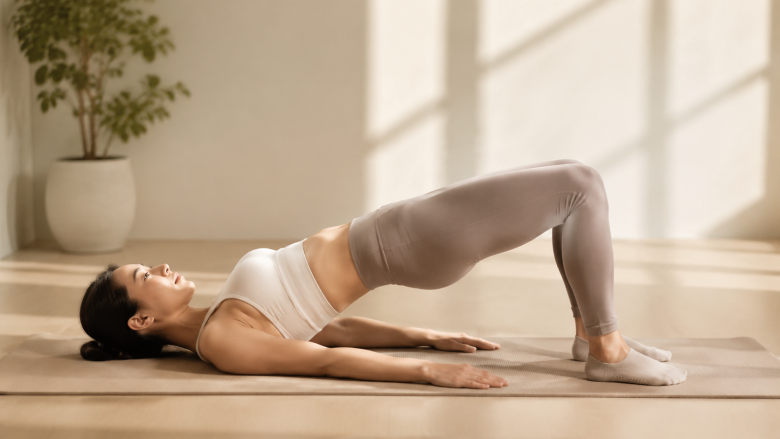
This is generally safe, but with a catch. If you have patellar tracking, do not press your feet too close to your glutes. That increases knee flexion and can pull the kneecap sideways. Keep your feet a comfortable distance away - about hip-distance from your body. As you lift your hips, ensure your knees stay hip-width apart and don't splay open. What can go wrong: if you feel a sharp pinch in the front of your knee, your feet are too far forward or too close. Adjust.
Clamshells
Clamshells are excellent for strengthening the hip external rotators, which support the knee. But the classic version - lying on your side with knees bent at 90 degrees - can be painful if you have a meniscus tear because the bent knee can twist. Modification: keep your legs straight (like a side leg lift but with a slight rotation of the top leg). Or do a standing clamshell using a resistance band around your thighs.
Side Kicks
Side kicks (lying on your side, lifting the top leg forward and back) are a staple. But if you have arthritis, the repetitive sliding of the kneecap can cause irritation. Modification: keep the range of motion small - only lift the leg a few inches. Or perform the movement while lying on your back with a small cushion under your knee to maintain a slight bend. The trade-off: you lose some hip flexor stretch, but you protect the joint.
Hundred (Modified)
The Hundred is a classic ab exercise, but the traditional version requires you to hold your legs in a tabletop position (knees bent at 90 degrees). This can strain the knee if the hip flexors are tight. Modification: keep your feet flat on the floor, knees bent, and perform the pumping of your arms while keeping your head and shoulders off the mat. This is perfectly effective and knee-friendly.
Can I Do Pilates If I Can't Kneel?
Yes, absolutely. Many people assume Pilates requires kneeling, but that's a huge misconception. Most of the foundational exercises - the Hundred, roll-up, spine stretch, bridge, and all side-lying work - are performed on your back or side. The only exercises that traditionally require kneeling are some versions of the cat-cow stretch, kneeling hip flexor stretches, and certain arm exercises like the kneeling side bend. But you can do all of those standing or seated.
If you cannot kneel due to a knee replacement, arthritis, or a meniscus tear, you have two options: Option 1: Perform the exercise standing while holding a wall or chair for balance. For example, a standing cat-cow involves rounding and arching your spine while standing with hands on your thighs. Option 2: Do the exercise on a mat with your knees on a thick cushion or folded blanket. If even that causes pain, skip it entirely. There is no Pilates exercise that is essential enough to risk your knee.
I once had a client with bilateral knee replacements who was told she could never do Pilates again. Six months later, she was doing the reformer in a seated position, using the leg press foot bar with minimal resistance. It was not the traditional routine, but it kept her moving and pain-free. The key is to let go of the idea that a "correct" Pilates move is the only way to benefit.
Progression Logic: From Wall to Mat to Reformer
Progressing too fast is the most common mistake I see. The temptation is to jump from a few wall exercises to a full mat class or a reformer class. Here's a safe progression framework:
- Phase 1 (Weeks 1-2): Wall Pilates only. Focus on alignment, breath, and minimal knee flexion. Do 3-4 moves, 2 sets of 8-10 repetitions. No resistance bands yet.
- Phase 2 (Weeks 3-4): Add mat exercises on your back (bridge, modified hundred, leg slides). Continue wall work for standing moves. If you have no pain, add a thin cushion under your knees for side-lying moves.
- Phase 3 (Weeks 5-6): Introduce seated exercises (spine stretch, mermaid, seated side kicks). Begin adding resistance bands for hip strengthening - but only if you can maintain perfect alignment.
- Phase 4 (Weeks 7-8): Consider a reformer, but only in a private session or small group with an instructor who knows your condition. Start with the foot bar set to a light spring and keep your range of motion limited. Never use the reformer for lunges, squats, or deep knee bends.
This progression is a guideline. Listen to your body. If you flare up at any phase, step back to the previous phase for a week. Most people need at least 8 weeks of consistent, gentle work before they can attempt a full beginner class.
Honest Limitations: What Pilates Can and Cannot Do
Pilates can strengthen the muscles around your knee, improve alignment, and increase your range of motion. It can reduce pain for many people. But it is not a cure for structural damage. If you have a large meniscus tear that requires surgery, no amount of clamshells will fix it. If you have advanced osteoarthritis, Pilates can help you manage pain, but you will still have limitations.
There is also a real risk of overdoing it. I've seen clients who became so enthusiastic about Pilates that they did it every day, ignoring early signs of inflammation. Within a week, their knee was more swollen than before. Every other day is sufficient for knee rehab. Your joints need time to recover and adapt.
Another honest limitation: Pilates can be expensive, especially if you need one-on-one instruction. But you can do a lot at home with a mat and a wall. The most important investment is not equipment - it's your willingness to be patient and listen to your knee.
Final Takeaway: Your Knee, Your Rules
The best Pilates routine for a bad knee is the one that does not cause pain. That might mean doing only 10 minutes of wall Pilates. It might mean modifying every single move. It might mean skipping the class entirely on a bad day. That's okay. You are not failing. You are learning how to move in a way that respects your body's limits.
I've included a printable version of the self-assessment checklist at the end of this article (you can copy it into your notes). The next time you roll out your mat, run through it. If everything checks out, start with wall bridge and wall leg slides. If something feels off, take a rest day. Over time, you'll develop an intuition for what your knee needs - and that is the most valuable skill you can have.