When to Stretch and When to Stop
Lower back pain can feel like a trap. You want to move, but moving hurts. You want to rest, but resting stiffens you more. I've been there myself, and after years of working with clients who have chronic and acute back issues, I've learned that the difference between relief and more pain often comes down to one thing: knowing when to stretch and when to stop.
Most people assume that stretching is always good for a sore back. That's not true. If you're in the acute phase - the first 48 to 72 hours after an injury or a flare-up - aggressive stretching can worsen inflammation and muscle guarding. In those early days, gentle movement like walking or slow ankle pumps may be better than targeted stretches. Once the acute pain settles, gentle stretching becomes a powerful tool. The key is to listen to your body's signals, not just a timer on your phone.
Before you start any stretch, ask yourself: Is this pain sharp, stabbing, or radiating down my leg? If yes, see a healthcare provider first. If the pain is a dull ache or stiffness, gentle stretching is likely safe - but always start with the modifications I'll share below.
The 2-Minute Breathing Warm-Up That Changes Everything
The thing nobody tells you about gentle stretching is that the stretch itself is only half the story. The other half is how you breathe. When you're in pain, your nervous system goes into protection mode. Your muscles tighten, your breath becomes shallow, and every stretch feels like a fight. A simple breathing warm-up can shift your system from 'fight or flight' to 'rest and digest,' making the same stretch feel completely different.
I learned this the hard way. Early in my practice, I would rush clients into cat-cow or knee-to-chest without preparing their nervous system. They'd report feeling more tense afterward. Now I start every session with this 2-minute breath reset, and the difference is night and day.
Here's the routine: Lie on your back with knees bent, feet flat on the floor, and arms resting by your sides. Place one hand on your belly. Breathe in slowly through your nose for 4 counts, letting your belly rise. Pause for 2 counts. Exhale through your mouth for 6 counts, letting your belly fall. Repeat for 2 minutes. This diaphragmatic breathing activates the vagus nerve and reduces muscle tension. It's also a perfect way to start your morning after waking - something we explore in detail in our gentle wake-up routine with stretches and breathing.
After this warm-up, your body is ready to receive the stretches. You'll find that the same movement now feels easier and more comfortable.
The 6 Gentle Stretches (With Modifications for Severe Pain)
Below are six stretches I've used with hundreds of clients who have lower back pain. Each includes a standard version and modifications for when you have limited mobility or severe pain. Remember: never force a stretch. You should feel a gentle pull, not a sharp pain.
1. Knee-to-Chest Stretch (Standard and Modified)
Lie on your back with knees bent, feet flat. Slowly bring one knee toward your chest, clasping your hands behind your thigh. Hold for 20-30 seconds, breathing deeply. Lower and repeat on the other side.
Modification for severe pain: If lifting your leg is too difficult, place a pillow or folded blanket under your knee and just let it rest there. Or, instead of grabbing your leg, place a yoga strap or towel around your thigh and gently pull. This reduces the load on your hip flexors and lower back.
Also, if you have a herniated disc, avoid pulling both knees to your chest at the same time - that can increase pressure on the disc. Stick to one knee at a time.
2. Pelvic Tilt
Lie on your back with knees bent, feet flat. Gently tilt your pelvis upward, pressing your lower back into the floor. Hold for 5 seconds, then release. Repeat 10 times. This is a subtle movement, but it's excellent for waking up the core muscles that support your spine.
Modification: If pressing your back into the floor feels painful, place a small rolled towel under your lower back for support. You can also do this stretch while sitting on a chair - just tilt your pelvis forward and back while keeping your feet flat.
Most people don't realize that the pelvic tilt is not just a stretch; it's a stability exercise. It teaches your body to move from your pelvis rather than your lower back, which is a key skill for preventing future pain.
3. Cat-Cow Stretch (On Hands and Knees)
Start on all fours with your hands under shoulders and knees under hips. Inhale and drop your belly toward the floor, lifting your head and tailbone (cow pose). Exhale and round your spine upward, tucking your chin and tailbone (cat pose). Move slowly with your breath. Repeat 8-10 times.
Modification for wrist or knee pain: Place a folded towel under your knees. If your wrists hurt, make fists with your hands and rest on your knuckles, or use small yoga blocks. If being on all fours is impossible, try a seated cat-cow: sit in a chair, place hands on thighs, and arch/round your spine.
One common mistake: rushing through this stretch. The benefit comes from the slow, wave-like motion. If you go too fast, you're just moving your spine without engaging the muscles that stabilize it.
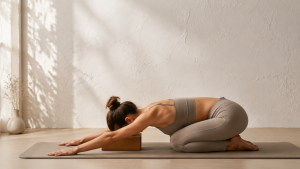
4. Child's Pose (Balasana)
Kneel on the floor, sit back on your heels, and slowly lower your torso toward your thighs, extending your arms forward or resting them by your sides. Hold for 30-60 seconds. This is a gentle stretch for the entire back.
Modification for tight hips or knees: Place a pillow between your thighs and calves. If your knees are sensitive, place a folded blanket under them. You can also perform child's pose with your arms resting on a stack of pillows or a yoga block in front of you - this reduces the stretch intensity.
Child's pose is one of the few stretches that feels restorative, but it's not always safe for everyone. If you have a disc injury, avoid rounding deeply into the spine. Instead, keep your back as flat as possible by using the pillow support.
5. Supine Spinal Twist (Lying Down)
Lie on your back with both knees bent. Slowly lower both knees to one side, keeping your shoulders flat on the floor. Hold for 20-30 seconds, then switch sides. This stretches the lower back, glutes, and hips.
Modification: If lowering both knees is too much, keep the top leg bent and the bottom leg straight. Or place a pillow between your knees for support. If your shoulders come off the floor, you're twisting too far - back off.
I've seen many people twist too aggressively, thinking more rotation equals more stretch. That's a fast track to a muscle spasm. The rotation should come from the waist, not the lower back. Imagine your spine is a string of pearls - each pearl moves slightly, not the whole string at once.
6. Lying Hamstring Stretch (With a Strap or Towel)
Lie on your back with one leg extended and the other lifted. Loop a towel or strap around the lifted foot and gently pull the leg toward you, keeping the knee slightly bent. Hold for 20-30 seconds. Tight hamstrings are a common contributor to lower back pain because they pull on the pelvis.
Modification: If lifting your leg straight is too intense, bend your knee and use the strap to pull your thigh toward your chest. You can also do this stretch sitting on the floor with a straight back, leaning forward slightly.
Most people don't realize that overly stretching the hamstrings can actually make lower back pain worse if the cause is a disc issue. That's because stretching tight hamstrings can increase the pull on the sciatic nerve. So if you feel a shooting pain down your leg, stop immediately and consult a professional.
Is It Good to Gently Stretch With Lower Back Pain?
This is a question I hear almost daily. The short answer is: yes, if done correctly and at the right time. Gentle stretching can reduce muscle tension, improve blood flow, and increase mobility. But it's not a fix-all. Let's break it down.
When you have lower back pain, your muscles often go into a protective spasm. This is your body's way of splinting the area to prevent further injury. Gentle stretching can help release that spasm, but only if the underlying cause is muscular. If the pain is from a structural issue like a herniated disc, spinal stenosis, or arthritis, certain stretches might aggravate the condition.
That's why the first step is always to identify the type of pain. If it's a new, sharp, or radiating pain, see a doctor or physical therapist before stretching. If it's a familiar ache from sitting too long or overdoing it at the gym, gentle stretching is likely safe.
Also, don't stretch into pain. A common misconception is that you need to feel a strong pull for the stretch to work. That's not true. The best stretch for lower back pain is one that feels like a 2 or 3 on a scale of 1 to 10 - a gentle sensation, not a burning or stabbing feeling. If it hurts, stop. Your body is telling you something.
For a deeper dive into how to integrate gentle movement into your daily routine, check out our guide on how to add gentle movement to your morning. It covers the same principles but with a focus on building a sustainable habit.
What Is the Best Position to Stretch for Lower Back Pain?
The best position depends on your specific pain pattern, but by far the most common and safest starting position is lying on your back with knees bent and feet flat on the floor. This is called the 'hook-lying' position, and it's the foundation for many of the stretches above.
Why is this position so effective? Because it relaxes the psoas muscle (a deep hip flexor that attaches to the lower spine) and takes the weight off your lumbar spine. When you stand or sit, gravity compresses the discs. Lying down with bent knees reduces that compression and allows the muscles to let go.
Another excellent position is on all fours (hands and knees), but this requires more shoulder and wrist strength. If you have wrist arthritis or knee issues, modify as described earlier.
For some people, side-lying works best, especially if they have a disc problem. Lying on your side with a pillow between your knees keeps the spine aligned and reduces pressure on the affected side. You can also do gentle knee-to-chest or trunk rotations from this position.
What about standing? Standing stretches (like forward folds or side bends) can be effective, but they increase the load on the lower back. I only recommend standing stretches once the acute pain has subsided, and only if you can maintain a neutral spine.
Here's a quick decision matrix based on your pain type:
- Acute, sharp pain: Lie on your back with knees bent, use the breathing warm-up, and only do pelvic tilts or very gentle knee-to-chest with support.
- Chronic, dull ache: Hook-lying for all floor stretches, then try cat-cow on hands and knees if comfortable.
- Sciatica (pain radiating down leg): Side-lying with a pillow between knees, avoid any stretch that makes the leg pain worse.
- Stiffness from prolonged sitting: Start with standing side bends or seated cat-cow at your desk.
No single position is the best for everyone. The best position is the one that allows you to stretch without pain and with full control of your breath.
How to Build a Daily Routine (Without Overdoing It)
Consistency matters more than intensity. Doing 5 minutes of gentle stretching every day is far better than 30 minutes once a week. Here's a simple framework I use with clients:
- Morning (after waking): 2-minute breathing warm-up, then pelvic tilts and knee-to-chest (one side at a time). This sets the tone for the day. Our 5-minute gentle stretches after waking article walks through this exact sequence.
- Midday (after sitting for 2+ hours): Seated cat-cow at your desk, plus a standing forward fold (bend knees slightly). This counters the effects of prolonged sitting.
- Evening (before bed): Child's pose, supine spinal twist, and lying hamstring stretch. This helps release the day's tension and prepares you for sleep.
Each session should be 5-10 minutes max. If you're in a flare-up, reduce to just the breathing warm-up and one or two stretches. The goal is to maintain mobility without provoking pain.
One thing I've learned from experience: don't try to do all six stretches every day. Rotate them. Pick 2-3 that feel best for your current state. Your body's needs change day to day - listen to it.
When Gentle Stretching Isn't Enough (Red Flags to Watch For)
I've had clients who came to me after months of stretching without relief. They were doing all the right moves, but their pain persisted. That's a sign that the root cause isn't muscular. Stretching can't fix a structural issue like a herniated disc compressing a nerve root, or a stress fracture in the vertebrae, or ankylosing spondylitis.
Here are red flags that mean you should stop stretching and see a healthcare provider:
- Pain that wakes you up at night or is constant
- Numbness, tingling, or weakness in your legs or feet
- Loss of bladder or bowel control (emergency, go to ER)
- Pain that travels below the knee
- Unexplained weight loss or fever
- Pain that started after a fall or accident
Stretching is a powerful tool, but it's not a cure-all. If you've been doing gentle stretches for 2-3 weeks with no improvement, it's time to get a proper diagnosis. Physical therapy, chiropractic care, or a visit to a spine specialist can uncover issues that home stretching can't address.
Honest Limitations: What Gentle Stretching Can and Can't Do
Let's be upfront: gentle stretching won't make your back pain disappear overnight. It's not a magic bullet. What it can do is reduce muscle tension, improve blood flow, and help you feel more in control of your body. It can also prevent future flare-ups by keeping your muscles flexible and your joints mobile.
What it can't do: fix a herniated disc, correct poor posture, or strengthen weak muscles. For those, you need a combination of strengthening exercises (like planks, bridges, and bird dogs), ergonomic adjustments, and possibly manual therapy. Stretching is just one piece of the puzzle.
Most people don't realize that focusing only on stretching can actually make some back conditions worse. For example, if you have hypermobility (loose joints), stretching can further destabilize your spine. If you have a disc bulge, stretching into end-range flexion (like rounding your back) can increase pressure on the disc. That's why I always emphasize the 'gentle' part - it's not about how far you can go, but how well you can move within your safe range.
Another trade-off: time. You might feel like you're not doing enough. But 5 minutes of mindful, gentle stretching is more effective than 20 minutes of aggressive stretching that leaves you sore. Quality over quantity, always.
Putting It All Together: Your Safety-First Sequence
Here's a step-by-step summary you can follow right now:
- Self-check: Is the pain sharp, radiating, or persistent? If yes, consult a professional. If it's a dull ache or stiffness, proceed.
- Breathing warm-up: 2 minutes of diaphragmatic breathing (4-in, 2-hold, 6-out) while lying on your back with knees bent.
- Choose your stretch: Start with one or two from the list above. Use the modifications if needed.
- Move slowly: Hold each stretch for 20-30 seconds. Breathe deeply. Do not bounce.
- Finish with a moment of stillness: Lie still for 30 seconds, noticing how your body feels.
Repeat this sequence once or twice daily. Over time, you'll learn what works for your body and what doesn't. That's the most valuable skill you can develop - not just following a list, but understanding your own back.
Gentle stretching is a practice, not a prescription. Be patient with yourself. And if you ever feel uncertain, err on the side of caution. Your back will thank you.