Why Your Core Needs a Different Kind of Recovery
In the first weeks after birth, your body is still rearranging itself. The muscles that stretched for months, the connective tissue that softened, and the pelvic floor that carried the weight of your baby are all in a state of recovery. When I tried to do a simple crunch six weeks postpartum, I felt a sharp pulling sensation in my lower belly and saw a ridge form along the midline. That was my first lesson: postpartum core work is not about getting abs back. It is about reconnecting with your body's deepest support system.
Gentle core exercises for postpartum are not just scaled-down versions of a regular ab workout. They are a completely different approach. They prioritize breath coordination, low intra-abdominal pressure, and the slow rebuilding of the deep transverse abdominis and pelvic floor. Most people don't realize that even a basic plank can be harmful in the early postpartum period if you are coning or doming. The goal is to move from the inside out, not the outside in.
This guide is based on what I learned from my own recovery and from working with a pelvic floor physical therapist. It is not a one-size-fits-all routine. It is a stage-based framework that respects your timeline, your birth story, and your body's unique needs.
What Makes an Exercise 'Gentle' for Postpartum?
Gentle means it does not increase intra-abdominal pressure in a way that pushes against a weakened abdominal wall or pelvic floor. It means you can maintain a neutral spine, feel your breath move without forcing, and avoid any sensation of coning, doming, or pressure in the vagina or rectum.
Three key factors define a truly gentle exercise:
- Load management: You start with gravity and minimal resistance. No weighted crunches or planks until later.
- Breath-first sequencing: You exhale on the effort, but the effort is only as strong as your exhale. If you can't breathe deeply, the load is too high.
- Neuromuscular control: You can actively engage your pelvic floor and deep core before moving. If you cannot feel those muscles, the exercise is not gentle.
When I started, I could not even feel my pelvic floor. I had to lie on my back, place a hand on my lower belly, and simply breathe for a few minutes before attempting any movement. That is the kind of pace I am talking about.
Stage-Based Approach: 0-6 Weeks Postpartum
This is the healing and reconnection phase. The uterus is still shrinking, and the connective tissue (especially the linea alba) is knitting back together. Nothing you do here should be strenuous. If you had a C-section, you also have a healing incision and internal scar tissue that needs gentle mobilization later.
What to Do
- Diaphragmatic breathing with pelvic floor lift: Lie on your back with knees bent, feet flat. Inhale, letting your ribs expand sideways and back. Exhale gently, drawing the pelvic floor up and the lower belly in. Hold for 2-3 seconds. Repeat 10 times. Do this twice a day.
- Heel slides: Same starting position. Exhale, slowly slide one heel out along the floor until your leg is almost straight. Inhale, slide it back. Keep your core engaged and avoid arching your back. 5 reps per side.
- Pelvic tilts (small range): Inhale, let your lower back arch slightly. Exhale, gently tilt your pelvis to flatten your back into the floor. Do not use your glutes or legs to push. Just a subtle tilt. 10 reps.
What to Avoid
- Any exercise that raises your head or shoulders off the floor (crunches, sit-ups).
- Planks, push-ups, or any weight-bearing on your hands and knees that creates intra-abdominal pressure.
- Leg lifts or double leg slides.
- Holding your breath or straining.
Warning signs to stop: Coning or doming along the midline, sharp pain, increased bleeding, pelvic pressure, or leaking urine. If you see any of these, you are doing too much too soon.
Modifications for C-Section
If you had a C-section, avoid lying flat on your back for the first few weeks. Prop yourself up with pillows. Support your incision with a small rolled towel or your hand during any movement. Do not lift your legs. Instead, focus on breathing and gentle ankle pumps.
Stage 2: 6-12 Weeks Postpartum
At this stage, most women have been cleared for activity by their doctor or midwife, but clearance does not mean you are ready for a full workout. The deep core is still weak and the pelvic floor may still be recovering. I made the mistake of jumping into a low-impact workout video at 8 weeks and felt a bulge in my lower abdomen afterward. I had to go back to breathing exercises for another two weeks.
What to Add
- Dead bug (modified): Lie on your back with hips and knees at 90 degrees. Exhale, slowly extend one leg toward the floor, keeping your heel a few inches above the ground. Inhale, return. Keep your lower back pressed into the floor. 5-8 reps per side.
- Supine march: Same starting position. Exhale, lift one foot a few inches off the floor, keeping the knee bent. Inhale, lower. Do not let your pelvis tilt. 10 reps per side.
- Side-lying leg lift (small): Lie on your side, knees bent 45 degrees, head resting on your arm. Exhale, lift your top knee slightly, keeping feet together. Inhale, lower. 10 reps per side. This targets the oblique sling without straining the midline.
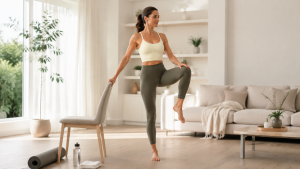
- Standing pelvic tilts: Stand with feet hip-width apart, knees soft. Exhale, tuck the tailbone under slightly, feeling a gentle draw of the lower belly. Inhale, release. 15 reps.
Progression Check
Before moving to the next stage, you should be able to do all of the above without coning, pain, or pressure. You should also be able to feel a distinct pelvic floor lift during your exhale. If you cannot, stay in this stage another two weeks.
Stage 3: 12+ Weeks Postpartum (and Beyond)
By now, your body has had time to rebuild the basic foundation. But gentle means you still avoid high-impact moves or heavy loads. I started adding bird-dog and glute bridges at this stage, but I still modified them. For example, for bird-dog, I kept my knees on the floor and only lifted my hand and opposite knee a few inches.
Exercises to Consider
- Quadruped bird-dog (modified): On hands and knees, exhale, extend one arm forward and the opposite leg back, keeping them low. Inhale, return. Do not lift higher than hip height. 6 reps per side.
- Glute bridge with core activation: Lie on back, knees bent. Exhale, lift hips, squeezing glutes, but keep the lower belly drawn in. Hold for 2 counts. Inhale, lower. 10 reps.
- Side plank (modified off knees): Lie on your side, knees bent, prop on your forearm. Lift your hips a few inches, keeping a straight line from knees to shoulders. Hold for 10-15 seconds. 2-3 reps per side.
When to Avoid These
If you have diastasis recti (a gap of more than two finger-widths), avoid full planks, crunches, and any twisting exercises until you have worked with a specialist. The bird-dog and side plank are usually safe, but only if you can maintain a flat belly (no doming).
The Mind-Body Connection: Your Check-In Before Every Exercise
I learned to ask myself three questions before each movement:
- Can I feel my pelvic floor? If not, I start with a few breaths to reconnect.
- Is my breath smooth? If I am holding my breath, the exercise is too hard.
- Is my belly flat? I place a hand on my lower abdomen. If I feel any bulging, I stop.
This check-in takes 10 seconds. It prevents injury and builds awareness. Over time, it becomes automatic. Many people skip this step and end up reinforcing poor movement patterns.
Understanding Intra-Abdominal Pressure and Why It Matters
Intra-abdominal pressure (IAP) is the pressure inside your abdominal cavity. When you lift, cough, or brace, your diaphragm, pelvic floor, abdominal muscles, and back muscles work together to manage it. After pregnancy, the connective tissue (linea alba) is stretched and weak, so the abdominal wall cannot contain pressure as well. If you do a crunch or a plank, that pressure pushes outward, causing the bulge you see as coning or doming. This can worsen diastasis recti and put stress on the pelvic floor.
Gentle exercises for postpartum are designed to keep IAP low. That means:
- No head-lifting until the core can stabilize.
- No heavy weights.
- No explosive movements.
- Always exhale on the effort.
If you have pelvic floor dysfunction (like prolapse or incontinence), the same principles apply. Avoid any exercise that makes you feel pressure or heaviness in the pelvis. As we covered in our guide to Gentle Wake-Up Routine with Stretches and Breathing, starting the day with a mindful breathing sequence can set the tone for lower IAP throughout the day.
How to Progress Without Pushing Too Hard
Progression should be based on how you feel, not on a calendar. I use a simple framework:
- Week 1-2: Only breathing and pelvic tilts.
- Week 3-4: Add heel slides and supine march if no coning.
- Week 5-6: Add dead bug if you can maintain a flat belly.
- Week 7-8: Add bird-dog and glute bridge if you can do all previous without pain.
If at any point you see coning, feel pain, or notice leaking, drop back to the previous stage for another week. This is not a failure. It is your body telling you it needs more time.
Common Mistakes I See (and Made)
Mistake 1: Doing too many reps. More is not better. Ten well-controlled reps are worth more than 30 sloppy ones. I used to do 20 heel slides and felt nothing in my core, but I was actually using my hip flexors. Slowing down and focusing on the exhale changed everything.
Mistake 2: Ignoring the pelvic floor. If you cannot feel a lift, or if you feel a bearing down, you are probably pushing with your belly instead of your pelvic floor. A good cue: imagine you are holding in a tampon that is about to fall out. That is a gentle lift, not a Kegel squeeze.
Mistake 3: Moving too quickly to upright exercises. Standing exercises require more core stability because gravity is working against you. I started standing leg lifts at 8 weeks and felt a pull at my incision (C-section scar). I went back to lying-down exercises for another two weeks.
When to See a Pelvic Floor Physical Therapist
If you have any of the following, please seek professional help before starting any exercise program:
- Urinary incontinence (leaking when coughing, sneezing, or exercising)
- Fecal incontinence or urgency
- Pelvic organ prolapse (feeling of a bulge in the vagina)
- Diastasis recti wider than two finger-widths
- Pain during intercourse
- Persistent back or pelvic pain
A pelvic floor PT can assess your individual needs and give you a tailored program. They can also teach you how to properly engage your deep core and pelvic floor. No online article can replace that personalized guidance.
Sample Weekly Routine (12+ Weeks Postpartum)
This is a framework I used. Adjust based on your stage.
- Monday: 5 min breathing + 10 heel slides + 10 dead bug + 10 bird-dog (modified).
- Tuesday: Rest or gentle walk (10-15 min).
- Wednesday: 5 min breathing + 10 supine march + 10 glute bridge + 10 side-lying leg lift.
- Thursday: Rest.
- Friday: 5 min breathing + 10 pelvic tilts + 10 standing pelvic tilts + 10 bird-dog.
- Saturday: Gentle walk or rest.
- Sunday: Full-body breath + check-in practice.
Each exercise should be done with a 2-second exhale during the effort. Rest 30 seconds between exercises. If you feel tired, stop. If you feel any pressure, stop.
FAQs: Gentle Core Exercises for Postpartum
Can I do these exercises if I had a C-section?
Yes, but start even slower. Avoid any positions that pull on the incision. For the first 6 weeks, only do breathing and ankle pumps. After 6 weeks, you can add pelvic tilts and heel slides, but keep the movement small. If you feel pain at the incision site, stop and consult your doctor.
How do I know if I have diastasis recti?
Lie on your back with knees bent. Place two fingers just above your belly button. Lift your head and shoulders slightly off the floor (like a tiny crunch). If you feel a gap wider than two fingers, you likely have diastasis recti. Do not do crunches. Use the gentle exercises above and see a PT.
Can I do these exercises while breastfeeding?
Yes, but keep in mind that relaxin (a hormone that loosens ligaments) can remain elevated for months after birth, especially if you are breastfeeding. That means your joints are more flexible and less stable. Avoid stretching too far and do not lock your elbows or knees. Focus on stability over range of motion.
What if I feel no engagement in my core?
That is common. Start with the breathing exercises. Imagine you are blowing out a candle. Feel your lower belly draw in. If you still cannot feel it, try sitting up and placing a hand on your lower belly. Exhale and cough gently. That reflex is the same muscle contraction you want to feel during the exercise. Then practice reproducing it without the cough.
Final Thoughts: Healing Over Hustle
Our culture often tells us to bounce back, to get our pre-baby body, to push through. But your body just did something extraordinary. It grew and birthed a human. That deserves respect, not a six-week challenge. Every time I did a gentle core exercise, I reminded myself that I was not trying to shrink my belly. I was trying to rebuild the foundation that would support me in carrying my baby, bending to pick up toys, and eventually running after a toddler.
For a deeper dive on how to incorporate gentle movement into your morning routine, check out our article on How to Add Gentle Movement to Your Morning. It aligns perfectly with the mindful, slow approach we have discussed here. Remember, consistency matters more than intensity. Five minutes of breath-focused core work every day is far more effective than 20 minutes of aggressive crunches once a week.
Trust your body. Listen to it. And let it guide you back to strength in its own time.