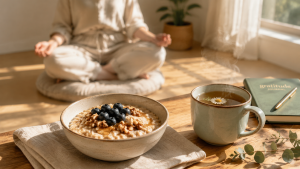
I remember mornings when the alarm jolted me awake, leaving me feeling scattered and unsteady before the day even began. Those rushed starts often carried a restless edge into my hours, making it hard to feel grounded. Over time, weaving in small self-care moments helped shift that—creating a gentle rhythm for body and mind that feels like a quiet gift to myself. Lately, I've been reflecting on how these simple anchors bring a sense of balance, especially on days when everything feels a bit off-kilter. It's not about perfection, but about starting steady.
Waking to Soft Light and Steady Breath
The first shift came when I stopped reaching for the harsh overhead light right away. Instead, I let in soft morning glow by parting the curtains just a bit, sitting up slowly in bed. That dim natural light felt kinder on my eyes, easing me into wakefulness without the usual jolt.
I paired it with three slow breaths—inhale through the nose, hold gently, exhale through the mouth. It was a small thing, but I noticed my shoulders dropping, a calm settling in before the day's pull began. On weekdays, this took barely two minutes, yet it changed the restless buzz into something steadier.
One chilly autumn morning stands out: the room still dark, steam from my mug rising nearby, and those breaths syncing with birdsong outside. It helped me feel present right away. If bright lights leave you tired early, this soft approach might ease that too.
Thinking about how to add mindful breathing to your morning opened up even more ways to make this moment my own. It's all about what feels natural in your space.
Moving Your Body with Gentle Flow
After those first breaths, I started with movement that didn't demand much—a few arm circles, neck rolls, or swaying side to side right by the bed. No gym clothes needed; just listening to what my body asked for in that quiet space. It woke my limbs without strain, leaving me less stiff.
I found it especially helpful on days after a late evening, when everything felt heavy. A short walk around the room or down the hall brought steady circulation, like oiling creaky hinges. Over weeks, this built a subtle strength that carried through chores and errands.
During one weekend reset, I stepped outside for five minutes under the trees, feeling the cool air on my skin. My steps slowed naturally, and that gentle flow lingered, making the rest of the day feel lighter. It's these everyday motions that remind us our bodies appreciate kindness first thing.
Elements from the gentle morning sequence: hydrate, move, nourish wove right into this, showing how flow builds from one piece to the next.
Hydrating and Nourishing for Inner Balance
Next came hydration, my warm lemon water ritual in a favorite mug—nothing fancy, just hot water squeezed with fresh citrus. Sipping slowly, I felt it spread warmth from the inside, countering any overnight dryness. It was a signal to my body: we're starting fresh.
Pairing it with something light, like a handful of almonds or a sliced apple, kept energy steady without heaviness. I noticed fewer mid-morning slumps after this, just a calm hum instead of crashes. On busy days, it was quick, yet grounding.
One rainy Tuesday, that warm sip by the window turned a gray outlook brighter, fueling me through calls without the usual fade. Simple fuels like these honor the body’s quiet needs. They create balance that feels natural, not forced.
This step flowed so well into nourishing habits I’d picked up elsewhere, keeping the morning unhurried.
Pausing for Mindful Clarity
With body tended, I carved out a pause for the mind—a single page in a notebook for one grateful thought or intention. No long lists; just whatever surfaced, like appreciating the quiet or a kind word ahead. It cleared the mental fog gently.
Weekends brought longer versions, maybe jotting weekend reset ideas while coffee brewed. I felt calmer heading into plans, less pulled by worries. This clarity wasn't dramatic, but it steadied my thoughts like an anchor in shallow water.
During a restless phase last spring, this pause became my reset—pen scratching paper, breath slowing. Afterward, decisions felt easier, days less overwhelming. It's a small window that lets the mind catch up with the body.
Building on 12 light additions to your morning routine, these pauses added layers without complexity.
What Helped Me, What Might Help You
I found the sequence worked best unbroken, like a quiet chain linking breath to movement to nourishment. Skipping one didn't derail me, but stringing them built rhythm. It helped when I kept expectations low—just showing up softly.
Personal tweaks made it mine: cooler water on hot days, or fruit swaps based on what was fresh. I noticed less tiredness overall, more steady presence with family or work. These weren't big changes, but they rippled outward.
For you, start where it pulls—maybe the breath if mornings feel chaotic, or movement if stiffness lingers. I saw steadiness grow from consistency, not intensity. Listen to your own tired spots; that's where kindness fits best.
It helped when I tied it to existing habits, like post-alarm rituals. You might find your version in quiet corners of your routine, making balance feel approachable.
Your 4-Step Morning Anchor
This simple 4-step anchor distills what I've shared into a flow you can return to daily. It's flexible, taking about 15 minutes total, and focuses on real-life ease. Each step builds on the last, creating that body-mind balance without rush.
I've used it through seasons—busy workweeks or lazy Sundays—and it adapts. The key is noticing how it lands for you, adjusting as needed. Here's the sequence that became my gentle reliable:
- Step 1: Awaken softly - Open curtains for natural light, take 3 deep breaths (1-2 min).
- Step 2: Move kindly - Gentle stretches or 5-min walk, notice your body's steadiness.
- Step 3: Hydrate and fuel - Warm water with lemon, add a handful of nuts or fruit.
- Step 4: Center your mind - One grateful note or intention, feel the calm settle.
After trying this a few times, I felt the pieces connect into a whole. It’s not rigid; let it breathe with your day.
Gentle Experiment: One Week of Morning Anchors
For a soft start, pick just Step 1—soft awakening with light and breath—for three to seven days. Do it first thing, no matter what follows. Note how it shifts your morning feel, maybe in a quick evening jot.
I tried this during a hectic stretch and watched restlessness fade by day four. Small consistencies like this reveal what sticks. After the week, add another step if it feels right, or linger here.
It's about discovery, not pressure—see what steady calm emerges for you.
What one piece of this feels right for your mornings? Try it tomorrow and notice how your day shifts.
Frequently Asked Questions
How much time does this morning plan really take?
About 15-20 minutes total, but it flexes to your pace—start with five if rushed, building as it fits. I’ve squeezed it into commutes by prepping water night before. The beauty is its gentleness, growing without clock-watching.
Can I do this if I'm not a morning person?
Yes, truly—shift wake time slightly later if needed, focusing on restoration over early rises. I wasn’t one either; soft lights and breaths made it less daunting. Adjust to what feels renewing, not rigid.
What if I miss a day?
It’s all good; kindness means no self-judgment, just picking up next morning. I missed plenty during travel, returning steadier each time. Steady rhythm rebuilds naturally over days.
Do I need special tools or products?
Nope, basics like a window, water, and notepad suffice—whatever’s in your kitchen or bedside. I used everyday mugs and paper scraps at first. Keeps it real and open to anyone.
How do I know if it's helping my balance?
Tune into subtle shifts: less morning restlessness, steadier energy, or calmer thoughts. For me, it showed in handling surprises better. Trust your own sense of what feels more even-keeled.